Blog

Hier finden Sie die aktuellen Aktivitäten, Beiträge und Artikel im Zusammenhang mit dem Projekt. Der Blog ist nur in englischer Sprache verfügbar.
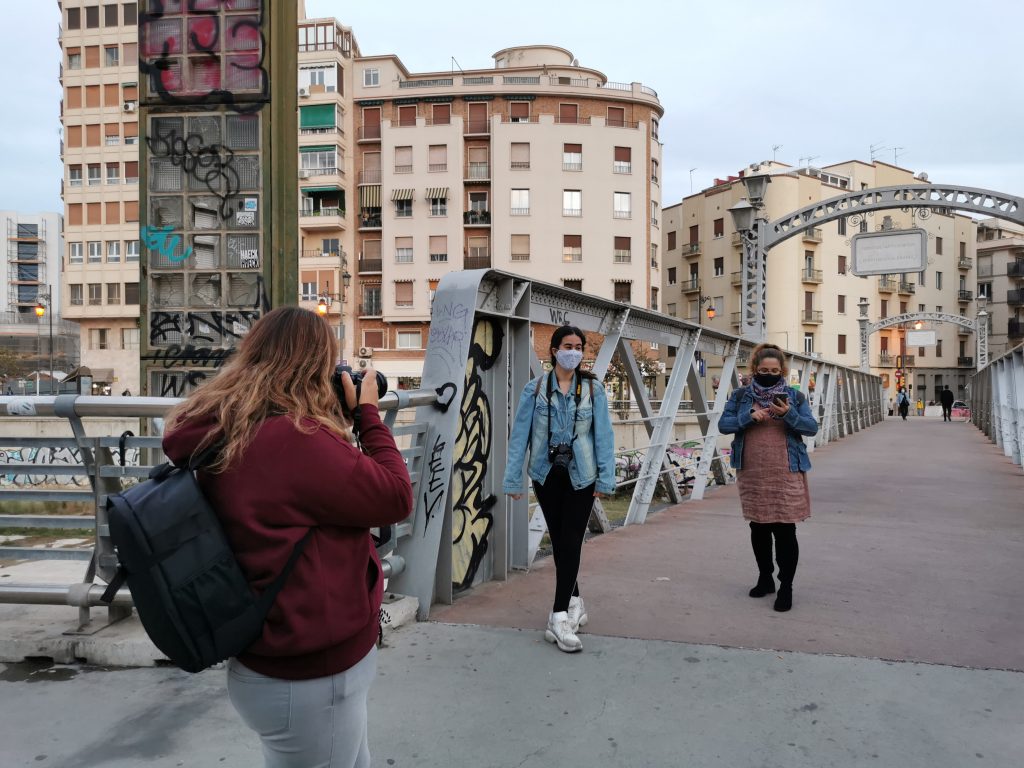

Last November 20th our spanish partner, Arrabal-AID, finished the second edition of the Photography Course in Málaga (Spain). The course
FAKE NEWS & INFORMATION on-line By Akrivi Anagnostaki "We are not just fighting an epidemic; we're fighting an infodemic" T.A.Ghebreyesus,
We started the second edition of the PHOTOGRAPHY COURSE, in Malaga (Spain). A total of 15 participants have the opportunity
Recently a new book was punished that is related to both goals of the CICERO project: Digital Competences & European
I am sometimes asked why I am involved in a project that combines photography with digital skills. The answer is
For those who think the best photographs are taken only with cameras. check here the best photographs taken with mobile
PHES (Spanish Solidarity Photography) is a project that arises from impotence but, above all, from the desire to want to
With the end of the State of Emergency in Portugal and a cautious return to (new) normality, Proandi trainees finally
Canon launches free platform with tips about photography and video. Tips, tricks and tutorials, created by ambassadors, as well as
Due to the Corona crises the face to face blended learning activities were not possible in the Austrian course. After

Analysis of the second CICERO photography course in Spain Congratulations to the participants!

Last November 20th our spanish partner, Arrabal-AID, finished the second edition of the Photography Course in Málaga (Spain).

The course was structured in two stages of 32 hours each one: a first “in-person” stage that took place from October 26th to November 9th, and a second distance learning stage; from November 10th to November 19th.

The face-to-face training was restricted to 15 students in order to ensure all the safety measures for COVID-19 prevention. A total of 45 participants enrolled in the course: 15 pupils for the on-site stage, and 30 users for the e-learning in the Moodle platform.

As usual, these groups of participants, as all the people who showed interest in the course, were a reflection of the range of people covered by Arrabal-AID. But also of the greatwork that our spanish partner does, striving towards the involvement of people from different social circumstances.

This is also a mirror of the society we live in where it is more and more necessary to have a proper knowledge of digital competences. Most of the students that attend the course are people who struggle with new technologies (including ‘digital natives’). They barely know how to use it, so they cannot work with it confidently and they complain that they cannot manage themselves when ‘something unexpected occurs’ or that they do not know how to use ‘some software’ beyond its basic tools.

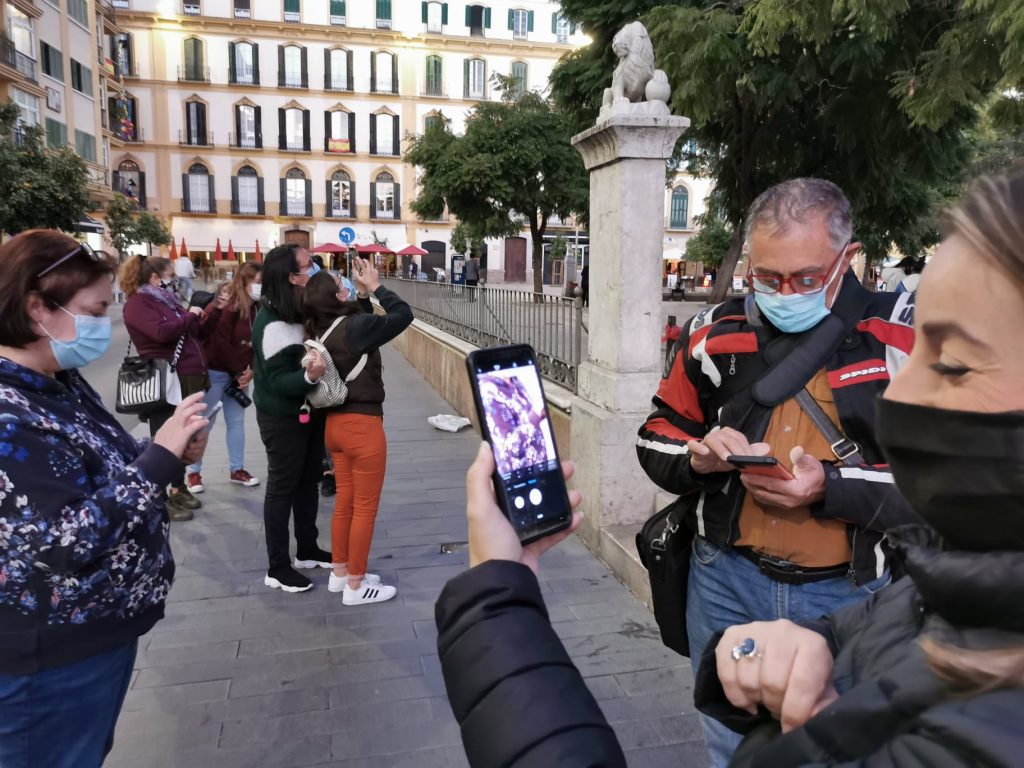
As before, the face-to-face stage combined in-class lectures with outdoor practices. We redesigned the course schedule to take the most the sunlight during the outdoor practises. Due to the intensive qualities of this stage, the course kept the structure of 50% lectures and 50% practice, but now we organized some sessions to be entirely outdoors.

The photography assignments for this second edition were fully focused on elements of cultural interest of Málaga, looking forward to the ‘Open Photo Contest’ which is under development and will be launched in the near future.

So we established paths of cultural heritage attending to two main factors: the time we had  to complete the path, and that these elements were not placed in narrow alleys. So we designed the path looking for heritage that were placed in wide-open spaces. Some of them had to be interesting locations to phograph during the daylight; and others during the night.

Students were able to know about many other locations of cultural interest through the official website of Cultural Heritage in Málaga: http://cultura.malaga.eu/es/patrimonio/ , where they can design their own paths. The main subjects of our path were the Roman Theatre, the Alcazaba, the Incarnation Cathedral, the Episcopal Palace, the Museum of Málaga and The Lighthouse among others.

The e-learning stage provided access to 30 students more to the Moodle platform where they could find all the documentation about the course, as well as different assignments to prove the learned competences. At the same time, our mentor worked to provide suplementary information such as references and examples from photography or recommended books.

During the distance students had the opportunity to participate in a virtual meeting with our mentor. This was one of the ways to offer a closer mentoring. Students participated actively, exposing individualized issues that were realated to common ones. Seeing photographies of each one of our students provided them the abilities to provided constructive commentaries about others work.

The participative attitude of our students amazed us. They were plenty of questions and so filled with the desire to learn more and more about photography and digital devices. Also they were very respectful with all the COVID prevention measures.

Each one of the participants who completed the course in any of both stages have received a certificate of course completion, providing and accreditation of the successful conclusion of the CICERO program.

Fake News & Information on-line

FAKE NEWS & INFORMATION on-line

By Akrivi Anagnostaki

“We are not just fighting an epidemic; we’re fighting an infodemic” T.A.Ghebreyesus, W.H.O. Director General.


Let’s take a look at the everyday reality: overloads of information, much still unknown, unverified “research” claims spread by digital media.

And we, the 2020 followers, as we learn more and more, we keep our knowledge base up and set the stage for  disinformation and fake news.

How can we “protect” ourselves?

Getting anxious for answers to questions like how much at risk for COVID-19 we and/or our kids are, or who is more likely to spread the virus to whom, we unavoidably turn to information from digital media.

Is it easy to understand what information to trust?

Loads of miracle cures are promoted and we are subconsciously pushed to look for arguments that confirm what WE believe, rather than inform us of opposing arguments.

It is essential for our well-being to assess the truth of information on- line. And this is a skill we can learn! Media literacy can help us to understand different types of messages the media are sending!

How can we start?

Media Smarts in Canada has developed the “Break the Fake” program (mediasmarts.ca/break-fake). It offers four main skills for finding and checking the accuracy of information on-line.

For COVID-19 specifically, go to Check then Share (checkthenshare.ca), where concrete tools to find information from trusted expert sources are provided.

Enjoy!  More to come!

adapted from “OECD Education and Skills Today”


2nd Course of Photography in Spain. LET’S START!

We started the second edition of the PHOTOGRAPHY COURSE, in Malaga (Spain). A total of 15 participants have the opportunity to learn and improve their skills around photography. Thanks to the security measures taken by our Spanish partner, Arrabal-AID, it has been possible to develop the second edition of our training in person, which improves interaction and the creation of new interpersonal relationships.
In addition, given the great reception of the training, as of November 10, people who did not get face-to-face training will be able to do it online, with the advice of an expert tutor.

Classes are from 4:30 p.m. to 8:00 p.m., with a total duration of 32 training hours, divided into lessons within the classroom as well as practices abroad.

New Book: European Heritage, Dialogue and Digital Practices

Recently a new book was punished that is related to both goals of the CICERO project: Digital Competences & European Cultural Heritage. Editors of the book are Areti Galani, Rhiannon Mason &  Gabi Arrigoni


European Heritage, Dialogue and Digital Practices focuses on the intersection of heritage, dialogue and digital culture in the context of Europe. Responding to the increased emphasis on the potential for heritage and digital technologies to foster dialogue and engender communitarian identities in Europe, the book explores what kind of role digital tools, platforms and practices play in supporting and challenging dialogue about heritage in the region.

Drawing on fieldwork involving several European museums and heritage organisations, the chapters in this volume critically engage with the role of digital technology in heritage work and its association with ideas of democratisation, multivocality and possibilities for feedback and dialogic engagement in the emerging digital public sphere. The book also provides a framework for understanding dialogue in relation to other commonly used approaches in heritage institutions, such as participation, engagement and intercultural exchange. The authors map out the complex landscape of digitally mediated heritage practices in Europe, both official and unofficial, by capturing three distinct areas of practice: perceptions and applications of digitally mediated dialogues around heritage within European museums and cultural policy, facilitation of dialogue between European museums and communities through participatory design approaches and non-official mobilisation of heritage on social media.

European Heritage, Dialogue and Digital Practices will be of interest to both scholars and students in the fields of heritage and museum studies, digital heritage, media studies and communication, the digital humanities, sociology and memory studies. The book will also appeal to policy makers and professionals working in a variety of different fields.

Open Access Content

Open Access content has been made available under a Creative Commons Attribution-Non Commercial-No Derivatives (CCBY-NC-ND) license

Read Full Book – Open Access

Photography & Digital Skills

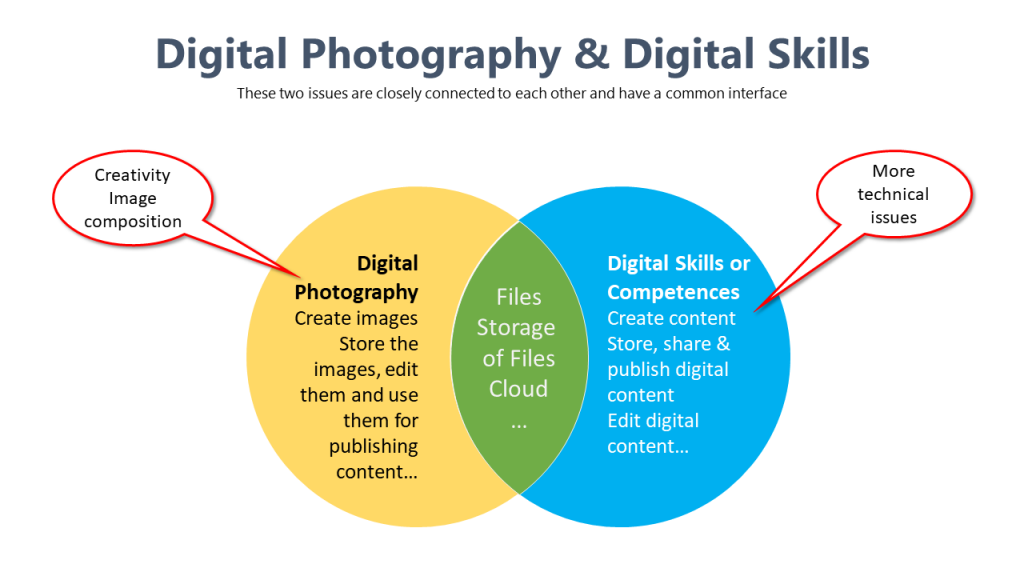
I am sometimes asked why I am involved in a project that combines photography with digital skills. The answer is quite simple: Because these two areas are closely linked and have a common interface.

The following illustration shows the rough connection.

Digital photography is closely connected with creativity and the knowledge and experience of image composition – this will lead to appealing images.

Digital skills in general help citizens to survive in a digital-dominated world. Here you will use social networks as well as a computer for work ore a tablet with a lot of apps with a tablet.

The project aims

The CICERO Project aims to build a bridge: Combine in-depth knowledge of designing images, including the technical possibilities of digital cameras with the requirements of our digital age. That means creating and publishing content as well as using social networks or documenting events or cultural treasures (from the present and the past).

Further benefits and added value of the project

Here are some ideas how the results of this project can be used in other fields of education.

School education

The project’s results can be used especially in project work or group-based teaching. Here are some examples for assignments.

  • Initiate a project documenting local cultural architectural treasures
  • Preparing an event documentation – this should include both high-quality images and a sophisticated accompanying text.
  • Create an exhibition as a documentation of an event (for example school festival, class trip, excursion, field trip, or similar).
  • Creating a series of pictures showing the different states of mind/moods of a person
[Einklappen]
Vocational Education and Training

A special training using the project’s results can be used to

  • Create a series of high-quality images as a “making-of” documentation
  • Implement composing and designing rules to create images of higher quality of professional issues (for example in the real estate business, the documentation of completed orders, proposals for customers and a lot of more opportunities).
[Einklappen]

MIRA Mobilie Prize 2020

For those who think the best photographs are taken only with cameras. 📱 👉 check here the best photographs taken with mobile phones in 2020 “MIRA Mobile Prize 2020”. In this 9th edition, more than five thousand photographs were submitted in this international competition.

At a time when traveling is very restrictive, seeing all these photographs reminds us of the trips we made and planning the next ones.MIRA Mobile Prize 2020

Solidarity photography, to raise funds against social exclusion

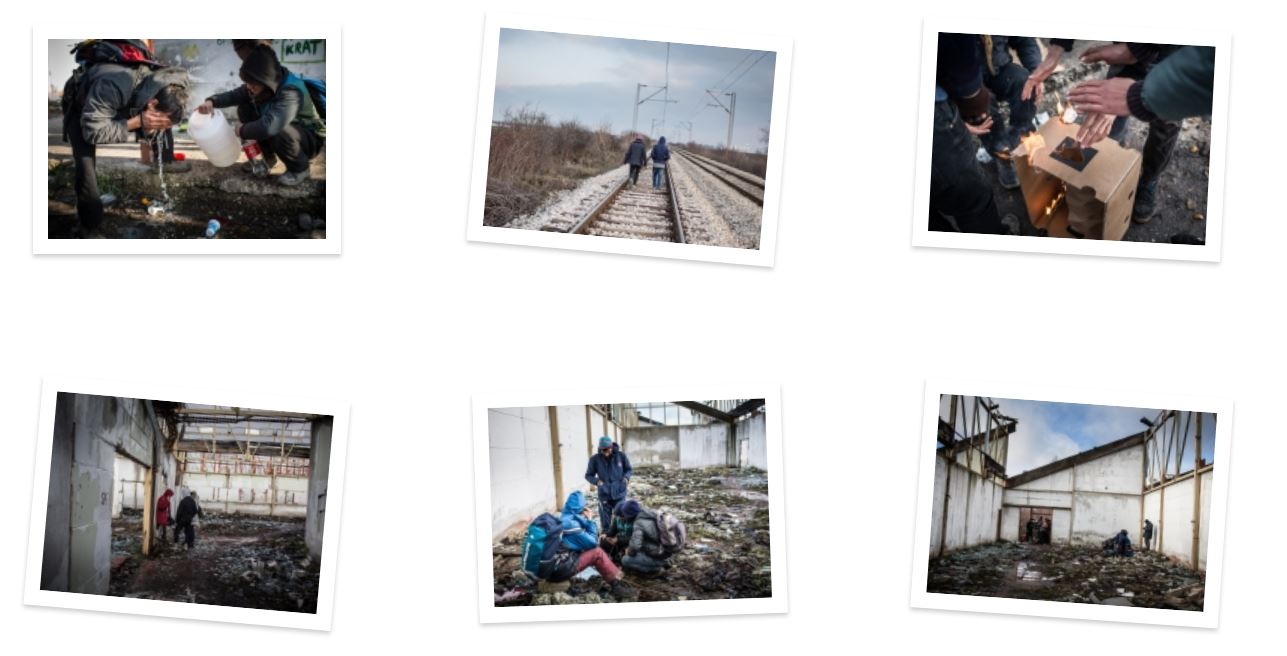
PHES (Spanish Solidarity Photography) is a project that arises from impotence but, above all, from the desire to want to change the world. Using photography as a tool for change and denunciation, he has managed to raise funds to help hundreds of people who have fled war, hunger or violence.
This project was carried out thanks to the support of the TAI Madrid University Center for the Arts, which has collaborated with PHES from the beginning, giving up its facilities as an exhibition space.

In this first edition, 68 works and 700 catalogs were sold, which meant a collection of 42,000 euros. This money was directed entirely and equitably to four NGOs with which it had previously decided to collaborate:

  • Sohram-Casra in Diyarbakir (Turkey)
  • Il gattaro d’Aleppo in Aleppo (Syria)
  • Jugend Rettet in the Mediterranean
  • Elea Project in Athens (Greece)

At the end of the first edition of PHES, the desire arises not only to raise funds to help these organizations, but also to bring photography directly to these people who, by necessity, are in a place of transit.


Thus, between December 2017 and March 2018, PHES travels to four countries: Greece, Spain, Serbia and Turkey, where photography workshops are held with refugees and migrants, who were provided with disposable cameras so that they could tell how a day of his life in that space they inhabit after having fled their country and that has nothing to do with their true home. On this occasion, the cities and organizations chosen were:

  • Project Elea in Athens (Greece)
  • New Century Vision Association in Malaga (Spain)
  • Sohram-Casra in Diyarbakir (Turkey)
  • No Name Kitchen in Sid (Serbia)

These trips and photographs have been collected in 33,293, a photobook in which around 80 migrants have participated, to whom we have been able to give voice and put a face; and in a traveling exhibition.

In order to carry out this new initiative, photographers Colita, Javier Vallhonrat, Cristina de Middel, José Manuel Navia, Carlos Pérez Siquier and Ferrán Freixá donated one of their works to PHES. These photographs were raffled, raising the nearly € 6000 with which the trips were financed.

This project has been carried out thanks to the support and collaboration of Fujifilm, which has provided us with all the photographic material necessary for the trips as well as the production of a traveling exhibition.

After the success of the first edition of PHES we decided to organize a second edition.

The exhibition took place between September 20 and October 10, 2018, again at the TAI University Center for Arts in Madrid and this time featured the works of 99 contemporary photographers. Between the works and the catalog of this second edition we have raised € 30,000 that this time have been destined to:

  • Maydayterraneo (Mediterranean)
  • Proactiva Open Arms (Mediterranean)
  • Sons of War (Syria)
  • No Name Kitchen (Serbia, Bosnia and Rome)
  • NASCO Feeding Minds (Ghana)

After this second one, PHES has continued offering workshops, along the same lines that were carried out on the trips, together with the Tomillo and Pinardi Foundations, where we have worked respectively with Gypsy and Moroccan women; and with young refugees. Just as PHES is in constant movement, our actions are also transforming as we are presented with the possibility of collaborating with organizations to continue putting the photographic image at the service of those who need it most.

News from Portugal 🇵🇹🇪🇺📸

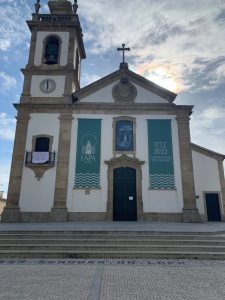
With the end of the State of Emergency in Portugal and a cautious return to (new) normality, Proandi trainees finally took the opportunity to leave home, carry out the last activity of the course “Assignment – Architecture” and take some pictures in city of Póvoa de Varzim! We know the resources may not be the best and the difficulties in training are some, but the important thing is not to give up and continue to work.

#ciceroproject #proandi #erasmus

Canon Connected – a free plataform for photography lovers

Canon launches free platform with tips about photography and video. Tips, tricks and tutorials, created by ambassadors, as well as by videographers, experts and influencers from across Europe, such as Daniel Etter, Pulitzer Prize winning photographer. https://www.canon-europe.com/pro/canon-connected/

Virtual Course Meetings

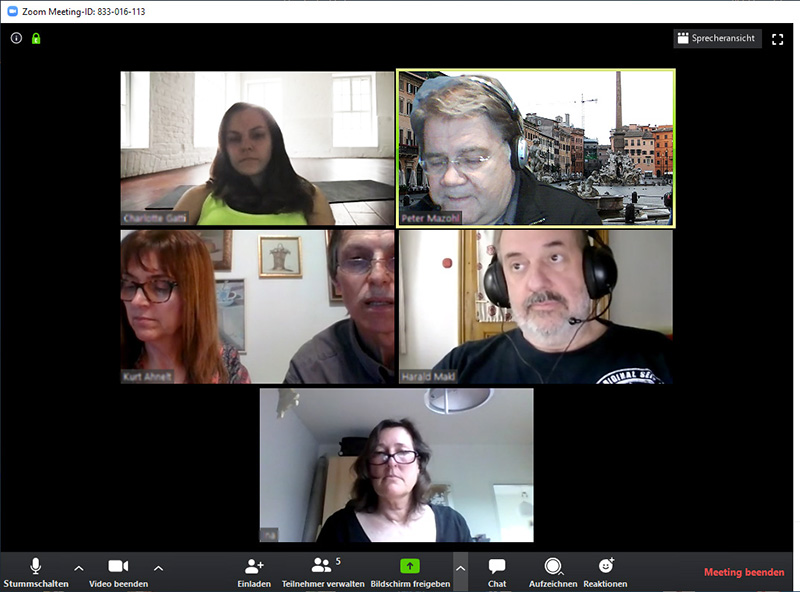
Due to the Corona crises the face to face blended learning activities were not possible in the Austrian course. After two learning session in our seminar hotel the course has been continued with virtual meetings. On six Friday evenings, the group met in the Internet (using ZOOM as the meeting platform) and continued the training.

It soon became clear that personal support in the on-site learning phase cannot be replaced by virtual meetings. Nevertheless, the group continued with the training and almost continued the course (one last meeting will take place on Wednesday, May 20th).